PROGRAMME TECHNIQUE
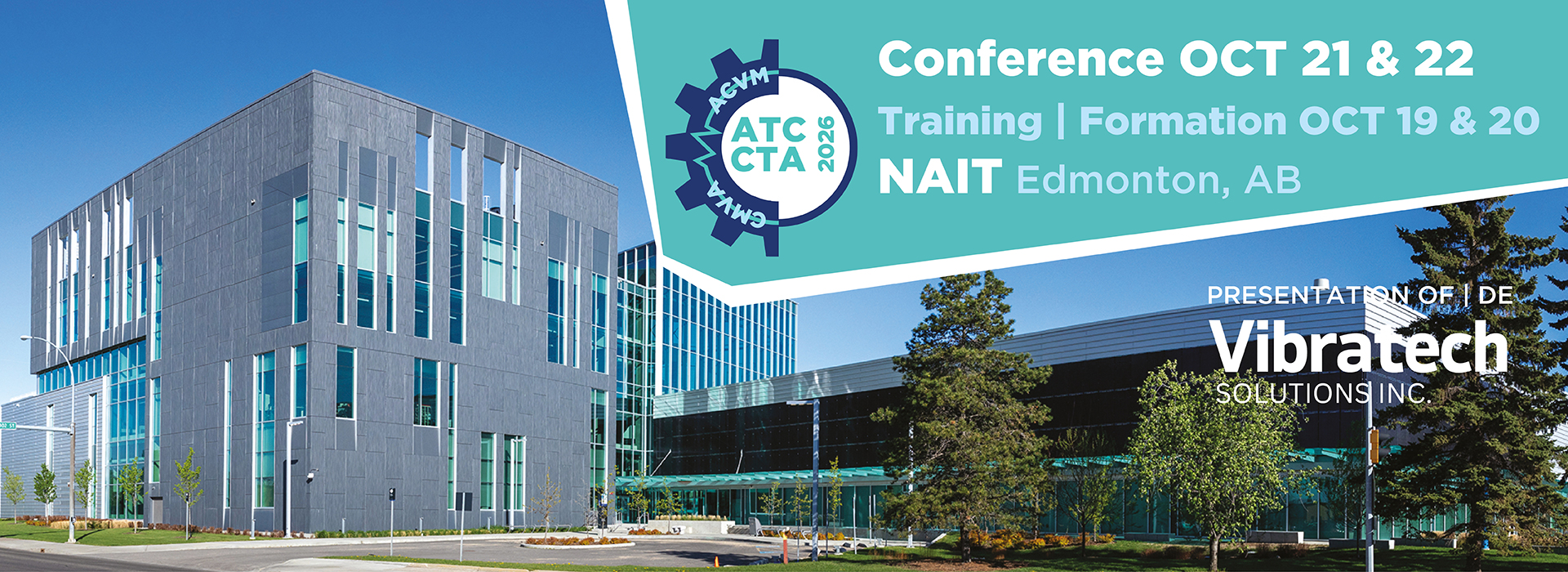
La Conférence technique annuelle de l’ACVM propose deux journées complètes de présentations techniques réparties en trois volets parallèles en anglais et en français. Ces volets couvrent un large éventail de sujets liés à la surveillance de l’état, à l’analyse vibratoire, à la maintenance prédictive et aux technologies émergentes en fiabilité.
Pour vous aider à planifier votre expérience, l’aperçu ci‑dessous reflète le déroulement quotidien typique de la conférence. L’horaire détaillé des présentations sera publié à l’approche de l’événement. Veuillez noter : certaines sections de cette page sont encore en cours de finalisation. Nous vous invitons à revenir consulter cette page.
Un horaire détaillé, incluant les titres des présentations, les conférenciers et les heures des séances, sera disponible dans le programme téléchargeable une fois qu’il aura été finalisé.
APPEL DE CONFÉRENCIERS
La Conférence technique annuelle de l’ACVM accueille les propositions de professionnels désireux de partager leur expertise, leurs études de cas et leurs innovations avec la communauté canadienne de la surveillance de l’état. Nous invitons les soumissions pour des présentations techniques, des ateliers et de courtes séances de formation. Il s’agit d’une excellente occasion de contribuer à l’avancement de notre domaine et d’échanger avec des pairs de partout au pays.
• Formats acceptés : présentations, ateliers, formations courtes
• Date limite pour soumettre le résumé : 15 septembre 2026
• Date limite pour soumettre la présentation finale : 30 septembre 2026
VOICI NOS CONFÉRENCIERS
Veuillez noter que les biographies des conférenciers et conférencières sont disponibles en français et en anglais.
La langue du résumé correspond à la langue de la présentation en direct.
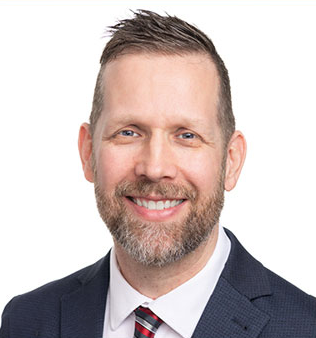 STEPHEN MCMILLAN, NAIT – CONFÉRENCIER INVITÉ ANGLOPHONE
Stephen McMillan est doyen de l’École de fabrication et d’automatisation et de l’École des transports du NAIT (Northern Alberta Institute of Technology). Auparavant, il a occupé divers postes au BCIT, notamment celui de doyen associé du génie mécanique, et possède plus de 15 ans d’expérience dans l’enseignement technique et la collaboration avec l’industrie. Il travaille en étroite collaboration avec des partenaires industriels et universitaires afin de promouvoir la formation aux technologies de fabrication émergentes et à l’innovation, et collabore avec le Centre canadien de soudage et d’assemblage pour faire progresser l’enseignement technique et l’adoption des nouvelles technologies.
Résumé de présentation à venir
ÉTUDIANTS : NOUVEAUTÉ!
Une table ronde consacrée à la nouvelle génération en fiabilité : perspectives de carrière, évolution du secteur et avenir de l’analyse vibratoire (en anglais seulement).
Carter Goddard, apprenti mécanicien d’entretien, étudiant NAIT
Matthew Firth, analyste des vibrations et spécialiste en maintenance prédictive, NB Power Point Lepreau
Laurie MacLachlan, directrice générale, Primac
Jaret Marshall, mécanicien d’entretien, analyste des vibrations et entrepreneur, Vibratech Solutions
Mikayla Pattison, Machinery Asset Specialist, Spartan Controls
GARY (GUANGXING) ZHANG, Baker Hugues
Gary (Guangxing) Zhang possède plus de 30 ans d’expérience en génie-conseil dans les secteurs pétrolier et gazier, de la production d’énergie et de la chimie. Analyste en vibrations certifié CAT IV, il est ingénieur professionnel agréé auprès de l’Association des ingénieurs et géoscientifiques de l’Alberta (APEGA), au Canada, depuis 2005. Son expertise couvre la mise en service, le diagnostic et le dépannage de grandes machines rotatives et alternatives, telles que les turbines à vapeur, les générateurs, les moteurs, les réducteurs, les compresseurs, les pompes et les ventilateurs. Ses travaux portent sur l’analyse vibratoire, la fiabilité des machines et la recherche des causes profondes de défaillance.
Case study of a Steam Turbine Generator
This presentation presents a case study of a steam turbine generator during the startup phase. It provides an overview of the machine train configuration, followed by a detailed analysis of the collected operational data to identify the root causes of machine trips through a series of diagnostic data plots, supplemented by photographic evidence for validation. The case study addresses multiple machine malfunction mechanisms, including light rotor–stator rubbing, rotor imbalance, and shaft misalignment. The analytical approach and findings offer a valuable reference for diagnosing and mitigating vibration-related issues encountered during machine startups.
JANOS PATTANTYUS, Hydro-Québec
Janos Pattantyus œuvre depuis plus de 30 ans comme spécialiste des équipements rotatifs en protection des machines, analyse vibratoire et maintenance prédictive. Membre de l’ACVM depuis 1996, il détient la certification Catégorie IV en analyse vibratoire et est ingénieur dûment licencié dans la province de Québec.
Standardising Dynamic Vibration Data transmission with IEC
A standardized dynamic data model is being proposed within the IEC (International Electrotechnical Commission). Can this lead to opportunities for interoperability oof instruments, sharing of data and feeding AI models?
MOHAMMADALI SADAGHIAN, University of Manitoba *Student Presentation*
Mohammadali Sadaghian est doctorant en génie mécanique à l’Université du Manitoba, où il se spécialise dans la surveillance d’état, le diagnostic des défauts et le pronostic des machines tournantes à l’aide de l’intelligence artificielle. Il possède plus de dix ans d’expérience en ingénierie de la maintenance dans l’industrie ferroviaire, plus de cinq ans d’expertise en surveillance d’état et environ trois ans d’expérience dans l’application de l’intelligence artificielle et de l’apprentissage automatique à la maintenance prédictive. IL est analyste certifié en vibrations de niveau CAT II, récipiendaire de la Research Manitoba PhD Research Studentship Award et auteur de deux articles scientifiques évalués par les pairs. Il a également collaboré avec une entreprise aérospatiale de Winnipeg au développement d’un logiciel de surveillance d’état des roulements destiné à des applications industrielles. Ses recherches actuelles portent sur le développement d’un agent d’intelligence artificielle pour la surveillance d’état des roulements, intégrant des techniques avancées de traitement du signal, d’apprentissage automatique et des connaissances métier afin d’améliorer la maintenance prédictive et l’évaluation de l’état des machines.
An AI Agent for Autonomous Bearing Condition Monitoring and Predictive Maintenance
Rolling element bearings are among the most critical components in rotating machinery, and their unexpected failure can result in costly downtime, reduced productivity, and safety risks. Although recent advances in artificial intelligence have significantly improved bearing fault detection and diagnosis, most existing approaches remain model-centric, requiring considerable human expertise for signal interpretation and maintenance decision-making. Furthermore, general-purpose large language models (LLMs) provide powerful reasoning capabilities but are not designed to execute reliable condition monitoring workflows, directly analyze vibration data, or consistently integrate domain-specific diagnostic knowledge. These limitations motivate the development of specialized AI agents tailored to industrial maintenance applications.
This work presents the development of an intelligent AI agent for autonomous bearing condition monitoring by integrating advanced signal processing, machine learning, engineering knowledge, and large language model reasoning within a unified decision-support framework. The proposed agent performs end-to-end analysis, including vibration signal preprocessing, feature extraction, health indicator generation, fault diagnosis, severity assessment, and interpretation of results. Unlike conventional diagnostic models that primarily provide fault classifications, the agent explains its conclusions, recommends appropriate analyses, and supports maintenance engineers through interactive, context-aware reasoning.
The proposed architecture is modular and designed to accommodate data collected under constant operating conditions while integrating both data-driven models and physics-informed knowledge. By orchestrating specialized analytical tools rather than relying solely on a general-purpose LLM, the AI agent delivers consistent, explainable, and application-oriented diagnostics suitable for real-world industrial environments. Preliminary development demonstrates the feasibility of the proposed framework for reducing diagnostic complexity, improving maintenance decision-making, and enabling continuous learning as new machine data become available.
The proposed AI agent represents a step toward next-generation intelligent maintenance systems that combine autonomous analysis, explainable diagnostics, and human–AI collaboration to enhance predictive maintenance and machinery reliability.
HEBERT LIBREROS, PdMA
Hebert Libreros est ingénieur industriel et titulaire d’un MBA de l’Université de Californie à Los Angeles (UCLA). Il cumule plus de 35 ans d’expérience dans les secteurs manufacturier et de la fiabilité industrielle. Depuis 22 ans, il occupe le poste de directeur régional chez PdMA Corporation, où il dirige les activités internationales de marketing et de développement des ventes. Avant de se joindre à PdMA en 2004, Hebert a occupé des postes d’ingénierie et de direction d’usine dans plusieurs installations manufacturières en Amérique latine et en Amérique du Nord. À ce titre, il a piloté avec succès la mise en œuvre du Lean Manufacturing et de la maintenance productive totale (TPM), contribuant à améliorer de façon significative l’efficacité globale des équipements et la performance opérationnelle. Au cours de sa carrière chez PdMA, Hebert a accompagné plus de 500 sites industriels à travers le monde dans l’amélioration de la fiabilité des moteurs électriques, l’augmentation de la disponibilité des équipements et l’optimisation des stratégies de maintenance. Son expertise terrain et son approche axée sur les résultats font de lui un conférencier recherché dans les domaines de la maintenance prédictive, de la fiabilité des actifs et de l’excellence opérationnelle.
From Portable Tester and Permanently Installed Ecosystem for Electric Motor Testing
Global competition and economic uncertainty have made equipment reliability a top priority. Unplanned downtime costs industrial manufacturers $50 billion a year; the average manufacturer loses roughly 800 hours annually. Combined with an aging workforce and the loss of long-term motor expertise, these pressures make an effective electric motor test program essential. Motor reliability testing can take different forms, the purpose of this paper is to present electrical testing as an element of world-class reliability programs.
The current practices – Reliability of critical electrical system can be evaluated through Six Fault Zones: Power Quality, Power Circuit, Insulation, Stator, Rotor, and Air Gap. With variable test voltage from 250 to 5,000 V, a portable system can perform off-line and on-line, torque and efficiency analysis on motors of any size, type, or condition. For safe operation and testing, the system can be paired with permanently installed test points measuring three voltages and three currents on running three-phase motors, reducing voltage and current to safe levels per OSHA and NFPA 70E. Technicians collect data in seconds from a single connection point, without full PPE or lock-out/tag-out.
The new Ecosystem with 24/7 monitoring – Adding PdMAeye®, permanently installed technology that monitors critical motors 24/7 and sends immediate cell phone notification when a fault is detected. It issues color-coded alarms and stores data in the cloud for access anywhere. This enables data-driven and earlier failure detections. At a remote pumping station, PdMAeye caught rotor degradation early, letting the company schedule repairs on its own terms while raising test frequency from quarterly to continuous with no added manpower. At a cement plant, data revealed elevated machine train frequencies traced to debris on the grinding rollers.
We will present how to maximize uptime, safety, and return on investment with applying closer monitoring to motor criticality within manpower and budget constraints.
JOSE RABELL, SDT Ultrasound Solutions
José Rabell possède plus de 20 ans d’expérience dans le domaine de la surveillance de l’état des équipements. Analyste de vibrations certifié CAT III par Technical Associates of Charlotte et MLT1 par ICML, il a travaillé dans plusieurs usines de pâtes et papiers aux États-Unis et au Canada, occupant divers postes, de consultant en gestion d’actifs à responsable de la fiabilité d’une papetière.
PdM 4.0 wireless vibration sensors
More and more we see wireless vibration sensors coming up in the market. How do they work? How is the data collected and transmitted? How is data analyzed and transformed into information? What assets should be covered? Are these sensors the right tool for me? Let’s explore the technology behind them and how they can make PdM a success.
GILLES LANTHIER, SDT Ultrasound Solutions
Gilles Lanthier est directeur régional de SDT Ultrasound Solutions pour le Québec et les Maritimes. Il est analyste en vibrations ACVM CAT III, spécialiste en ultrasons de niveau 2 et leader certifié en fiabilité, fort de plus de 25 ans d’expérience dans le domaine.
Ultrasound & Electrical Systems
Ultrasound has traditionally been used in electrical condition monitoring as a screening technology to identify abnormal acoustic emissions associated with electrical discharge. However, the potential of the technology extends considerably beyond simply determining whether an abnormal condition exists. This development project focuses on advancing ultrasound from an inspection tool toward a more comprehensive electrical diagnostic methodology capable of supporting fault identification, localization, confirmation, and maintenance decision-making.
Electrical conditions such as corona, tracking, arcing, partial discharge, loose connections, and deteriorated contacts can generate ultrasonic energy before obvious physical deterioration or significant temperature increases are detected. By combining airborne and structure-borne ultrasound with technologies such as the SDT 340, acoustic imaging systems such as SonaVu, thermography, time waveform analysis, and heterodyned/demodulated spectral analysis, considerably more information can be obtained about the nature and location of abnormal electrical activity.
A fundamental objective of this development work is to establish diagnostic signatures based on confirmed field conditions. Rather than relying solely on ultrasonic amplitude, the methodology evaluates signal characteristics including impulsiveness, repetition, broadband energy, modulation, stability, and relationships with the 60 Hz electrical power cycle. These characteristics are then correlated with equipment operating conditions, thermographic findings, acoustic localization, and ultimately physical inspection of the affected component.
This approach is particularly important because no single condition-monitoring technology provides complete diagnostic certainty. Ultrasound may detect electrical activity without a significant thermal anomaly, while thermography may identify resistance-related heating without significant ultrasonic emissions. Combining technologies therefore provides a stronger diagnostic foundation.
The ultimate goal of this project is to develop a repeatable, evidence-based electrical ultrasound diagnostic process. By building a library of confirmed defects, associated waveforms, spectra, acoustic images, thermograms, and physical findings, field observations can progressively be transformed into practical diagnostic knowledge—improving electrical reliability while reducing unnecessary exposure to energized equipment.
MATTHEW FIRTH, NB Power Point Lepreau
Matt Firth est un mécanicien industriel certifié Sceau rouge, fort de plus de 25 ans d’expérience dans l’industrie lourde, dont 13 ans spécialisés en maintenance prédictive et fiabilité. Sa carrière couvre divers secteurs, notamment l’assemblage automobile, l’industrie pharmaceutique, la sidérurgie, les pâtes et papiers et l’industrie nucléaire. Actuellement, Matt met son expertise au service de la centrale nucléaire de Point Lepreau, au Nouveau-Brunswick (Canada), où il contribue à la fiabilité des équipements, à la surveillance de leur état et à l’optimisation de la maintenance dans un environnement hautement critique et axé sur la sécurité.
Matt est également président de la section Atlantique de l’Association canadienne des vibrations des machines (ACVM), où il promeut les pratiques de maintenance prédictive et de fiabilité. Il détient les certifications suivantes : analyse vibratoire (catégorie III), ultrasons (niveau II), thermographie (niveau II), MLT I, MLA I et amplification de mouvement (niveau I). Passionné par le partage des connaissances et le mentorat, Matt s’engage à promouvoir des stratégies de maintenance novatrices et fondées sur les données afin d’améliorer la fiabilité et la performance opérationnelle des équipements.
From Vibration to Resolution: Solving Fan Resonance Through Structural Modification
Resonance is a common but often challenging source of excessive vibration in rotating equipment. Correctly identifying resonance as the root cause is critical, as conventional corrective actions such as balancing or component replacement may not address the underlying problem.
This presentation examines two industrial fan case studies where excessive vibration was traced to structural resonance. The first fan operated at 1800 RPM, with vibration levels reaching 43.5 mm/s. The second operated at 1200 RPM, with vibration levels of 13.4 mm/s. In both cases, vibration analysis indicated that the fan operating speed was closely associated with a structural natural frequency.
Frequency Response Function (FRF) testing was performed to characterize the supporting structures and accurately identify their natural frequencies. Testing confirmed that both structures had natural frequencies below their respective operating speeds, resulting in significant dynamic amplification during operation.
Rather than treating the symptoms through balancing or equipment replacement, the corrective action focused on modifying the supporting structures to increase their stiffness and shift the natural frequencies away from the operating speeds. Following the structural modifications, vibration levels on the first fan were reduced from 43.5 mm/s to 3.66 mm/s, while the second fan decreased from 13.4 mm/s to 1.98 mm/s.
These case studies demonstrate the effectiveness of combining conventional vibration analysis with FRF testing to diagnose structural resonance and determine an appropriate corrective action. They also highlight how targeted structural modifications can provide a relatively simple, cost-effective, and permanent solution to severe vibration problems.
SHANNON LAU, Suncor Syncrude Mildred Lake
Shannon Lau, ing., travaille dans l’industrie pétrolière et gazière depuis 2008. Elle occupe actuellement le poste de conseillère en fiabilité des équipements rotatifs et d’autorité technique pour le site Syncrude de Mildred Lake. Titulaire d’un diplôme en génie physique de l’Université de la Colombie-Britannique, elle a travaillé avec des équipements rotatifs dans les secteurs du raffinage et de la production d’énergie, et s’intéresse particulièrement aux systèmes de protection et de surveillance des machines. Elle possède une certification CAT II en analyse des vibrations et préside le comité d’experts en énergie.
Not Everything That Looks Like a Rub Is a Rub: A 68 MW Steam Turbine Generator Case Study
A 68 MW hydrogen-cooled steam turbine generator began exhibiting intermittent vibration excursions shortly after a major overhaul. While the events remained below alarm thresholds and attracted little operational concern, the vibration signatures appeared consistent with a Newkirk effect. Historical maintenance records revealed localized areas of minimal floating seal clearance, making a rub-induced thermal response a reasonable initial hypothesis. However, the machine remained in continuous service, limiting opportunities for inspection and diagnostic confirmation.
The investigation became more complex following an unrelated unit trip and subsequent restart that resulted in a vibration trip. Transient data fundamentally challenged the original diagnosis. The machine response during coastdown did not support a rub-induced thermal unbalance mechanism. Instead, the data pointed toward a more complex interaction involving rotor dynamics, bearing loading, and thermal effects.
As the investigation progressed, attention shifted from generator seals to the dynamic behavior of the low-pressure turbine bearing and the effects of thermal growth within the turbine-generator train. Further investigation identified a sticking turbine front standard slide, with step changes in movement observed during load reductions as the turbine casing contracted. This restricted thermal movement correlated with vibration excitation at the low-pressure turbine bearing. The investigation was further complicated by the machine’s 1970s-vintage design and the absence of a train rotordynamics study, limiting insight into the dynamic behavior of the hard-coupled turbine-generator train.
This presentation reviews the diagnostic process, competing hypotheses, and lessons learned while troubleshooting a critical machine that remains in operation and is not scheduled for a major outage until 2031. The case study demonstrates the challenges of diagnosing intermittent vibration events on unspared equipment with long maintenance intervals and emphasizes the value of combining vibration analysis, machine design knowledge, operating history, and field observations when evaluating potential failure mechanisms.
ERIC KAERT, Spartan Controls
Eric Kaert détient un baccalauréat en sciences appliquées de l’Université de l’Alberta. Il travaille depuis 14 ans chez Spartan Controls, où il occupe actuellement le poste de responsable du développement des affaires au sein du groupe Logiciels industriels et applications, se spécialisant dans les solutions de données analytiques.
Asset Intelligence: Automated technical interpretation of industrial data
See how combining automation expertise with data science and ML can gain new actionable insight from existing industrial data. Cohesive knowledge and support from sensors to digital infrastructure and analytics make unique in house solutions possible. SpartanPRO Asset Intelligence brings to the surface what is most important allowing teams to focus their time efficiently and effectively. Automatically and proactively have the asset health information and data to make better performance, reliability and optimization decisions. Example use cases for pumps, control valves and compressors will be covered.
LETICIA GOMES MATHIAS NETTO LIMA, The Constellation
Leticia Lima est ingénieure en fiabilité « offshore » dans l’industrie pétrolière et gazière. Forte d’une formation en génie métallurgique et des matériaux ainsi qu’en électromécanique, elle est spécialisée en ingénierie d’inspection des équipements et des matériaux. Elle possède une solide expérience en fiabilité des équipements, analyse des défaillances et amélioration des performances. Son expertise couvre les méthodologies d’ingénierie de la fiabilité, les investigations de défaillance, les stratégies de maintenance et l’analyse des performances des équipements. Elle est également formée à l’analyse vibratoire, à la thermographie infrarouge, à l’AMDEC, à la méthode RCM, à l’analyse des causes profondes et à l’analyse des huiles. Ses domaines d’intérêt comprennent l’ingénierie de la fiabilité, la surveillance de l’état, l’analyse des défaillances et l’application des données et des méthodes d’ingénierie pour optimiser les performances des actifs et faciliter la prise de décision en matière de maintenance.
From Online Condition Monitoring to Predictive Maintenance Decisions:An offshore drilling case study
(Main author Vilderson Dias)
Offshore drilling operations require maintenance strategies capable of identifying equipment degradation early enough to support planned interventions and reduce unplanned downtime. This paper presents the implementation and evolution of an online condition monitoring approach for diesel engines and generators operating across an offshore fleet.
The initiative evolved from periodic condition assessments to continuous, real-time monitoring. The monitoring architecture integrates onboard sensors, data transmission and centralized condition monitoring platforms, enabling continuous visualization and analysis of equipment condition. Key variables include vibration, temperature, electrical and operational parameters, with additional condition indicators such as oil contamination and moisture incorporated into the monitoring strategy.
A structured workflow was established to transform raw monitoring data into maintenance decisions: measurement, data transmission, alarm generation, technical analysis, decision-making and execution. Technical specialists evaluate alarms and trends, issue condition-based recommendations and, when required, initiate maintenance actions through the company’s maintenance management system.
The application demonstrated measurable results. Eighteen diesel generator sets are monitored continuously, with nine equipment conditions identified before failure since 2024. In 2026, three of four documented detections originated from online monitoring. Five documented cases represent an estimated 1,128 corrective maintenance hours avoided.
The case demonstrates how continuous condition monitoring, integrated data and multidisciplinary technical assessment can strengthen predictive maintenance in offshore operations. Beyond detecting anomalies, the approach creates a structured flow from equipment condition to maintenance action, providing earlier intervention opportunities, improved decision-making and a historical basis for identifying recurring failure patterns.
JAYSON BARCELO, Primac Reliability Consultants
Jayson Barcelo est spécialiste en surveillance de l’état des équipements et possède plus de 18 ans d’expérience dans les domaines de la maintenance, des projets, de la fiabilité des équipements, de la maintenance prédictive et de la gestion d’actifs. Tout au long de sa carrière dans les industries du ciment et de la fabrication, il a piloté des initiatives portant sur l’analyse vibratoire, l’excellence en lubrification, l’analyse des causes profondes de défaillance, la maintenance préventive et prédictive, ainsi que l’amélioration de la fiabilité des équipements. Jayson est titulaire d’une licence en génie mécanique et possède les certifications suivantes : analyste vibratoire de catégorie II, expert en ultrasons de catégorie I, analyste de lubrifiants pour machines de niveau II et technicien en lubrification de machines de niveau I. Il a mis en œuvre avec succès des programmes de fiabilité, optimisé des stratégies de maintenance et géré d’importants projets d’investissement et de remplacement d’équipements. Jayson a à cœur d’aider les entreprises à améliorer la performance de leurs actifs pour atteindre les plus hauts standards, réduire leurs coûts de maintenance et instaurer une culture de fiabilité durable grâce à la surveillance de l’état des équipements et à des pratiques de maintenance basées sur les données.
Ultrasonic Lubrication Program: Technical Case Study on a Forced Draft Fan Fixed End Bearing Reliability Improvement
The ultrasonic lubrication program implemented on a forced draft fan fixed end bearing in a petrochemical plant delivered significant reliability improvement through the application of condition-based lubrication principle. This initiative supports the objectives of ISO 55000, ISO 55001, and ISO 55002 by reducing asset risk, improving equipment performance, and enabling evidence-based maintenance decisions.
Historically, the fixed end bearing experienced chronic and multiple premature failures, requiring replacement approximately every six months resulting in costly maintenance and high reliability risk to operations. To address this issue, a structured ultrasonic lubrication program was implemented utilizing a bi-weekly frequency based on ultrasonic condition monitoring rather than traditional calendar-based intervals.
The program showed significant improvements in bearing operating condition. The ultrasonic dB RMS readings decreased from 56 to 33, representing an approximate 14 times ultrasonic signal reduction and 92.9% friction reduction. The bearing operating temperatures decreased by about 10–15°C, indicating improved lubrication film and reduced mechanically induced friction. The bearing life increased from an average of 4,380 operating hours to 17,424 hours, which is equivalent to quadruple the bearing life expectancy.
Additional benefits included a 50–60% reduction in grease consumption, reduced labor requirements associated with routinary lubrication activities, and improved overall maintenance utilization. Reliability analysis estimated that approximately 0.90 bearing failures were avoided during the monitoring period.
Financial analysis showed an estimated cost avoidance of approximately $191,348 against an annual program cost of $3,845, resulting in a return on investment (ROI) of approximately 4,876.5% and a payback period of 0.44 months.
The field results demonstrated that ultrasonic lubrication is a repeatable, scalable, and low-risk maintenance strategy capable of significantly improving equipment reliability while reducing operational costs.
TRACY DUNCAN (author Isaiah Mathew), TransAlta
Tracy Duncan est ingénieure en performance et fiabilité chez TransAlta et possède 20 ans d’expérience dans les secteurs de l’énergie éolienne et solaire. Elle est diplômée en génie électrique et est analyste des vibrations de catégorie III. Isaiah Mathew est ingénieur en surveillance avancée chez TransAlta et compte 7 ans d’expérience dans le domaine des énergies renouvelables. Il est diplômé en génie mécanique et analyste des vibrations de catégorie II.
Good Vibes: An Overview of Condition Monitoring for Wind Energy
TransAlta operates over 1000 wind turbines with online condition monitoring equipment on many. In this presentation we discuss typical configurations for wind, CMS, classic « catches » and use cases, trends in wind turbine, drivetrains and emerging monitoring technologies.
ELDON GRAHAM, Primac Reliability Consultants
Eldon Graham, ingénieur, travaille actuellement pour Primac Reliability. Il est titulaire d’une licence en génie mécanique de l’Université de l’Alberta et d’une maîtrise en génie mécanique de l’Université de Calgary. Il est certifié analyste vibratoire de catégorie III et en ultrasons de niveau II.
Compilation of Motion Amplification and Vibration
The Motion Amplification camera developed by RDI Technologies has revolutionized the industrial reliability field in the last decade. While vibration analysis remains the primary condition monitoring tool, it has limitations which poses challenges to even experienced analysts. By presenting a video showing the exaggerated motion of a machine asset, Motion Amplification can communicate a clear and concise picture of the underlying vibration problem. For complex structures and piping assemblies, vibration analysis is often limited in cost, planning, and time required to setup and wire a large number of sensors. With Motion Amplification, every pixel in the video is effectively turned into a sensor and the visualization of the motion of large structures can be accomplished in a much shorter period. The benefits of motion amplification camera can even be seen with simpler, more traditional vibration problems. Machine problems whose vibration signatures only show turning speed vibration can be notoriously difficult to diagnose with just vibration analysis alone. A Motion amplification video can provide an analyst with the means to quickly visualize the problem or even rule out possible issues. While the Motion Amplification camera can help offset limitations of vibration analysis, the camera itself also has its own disadvantages. As with any camera, the shooting environment including the lighting, having a clear line of sight and stable shooting location all plays a significant role in acquiring clear pictures. Primac Reliability has utilized the two technologies and, in many instances, have found their best work in compliment with each other. This presentation is a compilation of interesting case studies showcasing both motion amplification and corresponding vibration data.
DR IAN MELHADO, Primac Reliability Consultants
Le Dr Ian Melhado a obtenu son doctorat en médecine expérimentale à la University of British Columbia en 1999, grâce au soutien de la bourse Roman Mathew Babicki destinée aux doctorants en recherche sur le cancer. Après son doctorat, le Dr Melhado a travaillé comme chercheur principal chez Kinetek Pharmaceuticals, où il s’est spécialisé dans la protéomique et la bio-informatique afin de développer de nouveaux médicaments anticancéreux. Durant cette période, il a mis au point et fait breveter un algorithme inédit de séquençage des protéines exploitant des données de spectrométrie de masse. Après avoir quitté Kinetek, le Dr Melhado a rejoint le Centre de recherche sur le génome de l’Université de Hong Kong ; il y a dirigé une équipe de 40 chercheurs participant aux travaux du Consortium international HapMap, responsable du projet HapMap. Il a alors collaboré avec le professeur Pak Sham pour concevoir de nouveaux algorithmes de regroupement (clustering) et de graphes, intégrés par la suite au logiciel CLUSTAG, un outil destiné à la sélection de SNP marqueurs (tag SNPs) à partir des données HapMap. Le Dr Melhado a poursuivi sa carrière à l’Université de Hong Kong en rejoignant la Faculté de médecine en tant que professeur-chercheur adjoint ; il y a apporté une contribution significative aux domaines de la génétique moléculaire et de la biologie du développement, publiant plusieurs articles dans des revues scientifiques évaluées par des pairs. En 2020, le Dr Melhado a rejoint Primac Reliability Inc., où il continue de développer et de mettre en œuvre des algorithmes fondés sur l’intelligence artificielle pour la surveillance de l’état des systèmes, en s’inspirant explicitement des systèmes biologiques.
Superhearing* – We started by looking at machine vibration. We ended up learning to listen to it.
Superhearing — teaching software to listen to machines before they fail. Long before a bearing seizes or a gear strips, a machine’s vibration changes in a characteristic way. The hard part of condition monitoring was never collecting that vibration — it is interpreting it. A developing fault is buried beneath the normal vibration of a healthy machine, can mimic normal variation, and the judgment of what it means has lived inside a human expert’s head, one measurement at a time.
We set out to give software a sense of hearing — and hearing is more than a microphone. The cochlea is a fixed transducer: it splits sound into frequency bands and never learns or changes. Everything that makes sound meaningful happens higher up, in the auditory cortex, which learns from experience which patterns matter; memory, temporal reasoning, and understanding live further still, in the association cortex. We mapped this hierarchy directly onto a machine-learning system.
Prodigy plays the auditory cortex: it learns, from vibration alone and with minimal labelling, what a single measurement means. Rather than flagging that a signal “looks different,” it distinguishes a bearing defect from a gear fault, from unbalance and from misalignment — and grades how severe each is. Zeus-Agent plays the association cortex — memory and temporal reasoning — and inside it, a graph neural network models the machine train as a connected system, so that a fault echoing through the couplings from a motor to a gearbox to a load is traced back to its source, rather than blamed on the point where it happened to be heard.
This meant abandoning a purely DSP-driven approach in favour of a learned one — not another anomaly detector, and not an LLM. The result is a sense that listens continuously and tells a human, in plain language, when a machine is about to fail, what kind of failure is developing, and where in the machine it is coming from.
MAXIME CASAVANT, Hydro-Québec
Maxime Casavant est ingénieur en mécanique et possède 16 ans d’expérience dans le domaine des équipements de production hydroélectrique. Titulaire d’un baccalauréat en génie mécanique de l’Université de Sherbrooke, il est membre de l’Ordre des ingénieurs du Québec (OIQ) et analyste en vibrations certifié de catégorie II (CMVA). Après avoir travaillé pendant six ans à la conception mécanique de génératrices chez Voith Hydro, il a rejoint Hydro-Québec en 2017 ; il s’y spécialise dans la maintenance, le diagnostic et l’optimisation de la performance des groupes turbine-alternateur. Ses domaines d’expertise comprennent les machines tournantes, l’analyse vibratoire, la fiabilité des équipements, l’analyse des causes fondamentales de défaillance ainsi que les projets de remise à neuf d’équipements hydroélectriques.
Upper Guide Bearing Housing Vibration of a 350 MW Hydro Generator
Following the return to service of a hydro generator after a major refurbishment, vibrations at the generator guide bearing, which were already higher than before the refurbishment, increased significantly over the years, eventually leading to two trips caused by very high vibration levels. A mechanical inspection revealed a substantial amount of red powder (fretting corrosion, an indication of severe and abnormal structural vibration) at the seating surfaces of the upper bracket (housing), where the loads carried by the guide bearing are transferred to the foundations. A vibration analysis was conducted, and the recommended corrective action was to perform a dynamic balancing of the rotor.
This presentation will describe the main components of a hydro generator, the issues observed, the various instruments used, the interventions considered, the preparation and execution of the dynamic balancing, the results obtained, and a discussion and conclusion.
HUSSAM TAWFIK, Next Structural Integrity
Hussam Tawfik, Ph. D., P.Eng., est ingénieur mécanique principal et chef technique, spécialisé en intégrité structurale, analyse par éléments finis, analyse vibratoire et évaluation de l’aptitude au service. Ses activités comprennent la mitigation de la fatigue induite par les vibrations, l’évaluation des composants de l’enveloppe sous pression, l’analyse de la tuyauterie et de ses supports, les structures composites ainsi que les évaluations de prolongation de la durée de vie pour des applications dans les secteurs nucléaire et pétrolier et gazier. Il est titulaire d’un doctorat en génie mécanique de l’Université de Calgary ainsi que d’une maîtrise du Karlsruhe Institute of Technology (KIT), en Allemagne. Il a présenté et publié des travaux dans les domaines de l’intégrité structurale, des structures composites et de l’analyse avancée en ingénierie.
NSI Clamp-On Bracing: A Cost-Effective In-House Vibration-induced Fatigue Mitigation Solution for Small-Bore Connections
Small-bore connections are highly vulnerable to vibration-induced fatigue when local dynamic amplification creates excessive relative motion at fittings and branch connections. This presentation introduces the NSI Clamp-On Bracing, a cost-effective, in-house developed solution designed to reduce fatigue risk without welding to the process pipe.
Field measurements identified dominant vibration near 140, 280, and 420 Hz, with significant amplification of the attached assembly. The solution was validated using FFT analysis, modal assessment, field vibration measurements, and finite element time-history analysis.
Following installation, relative vibration was reduced by approximately 72% axially and 45% horizontally, while selected assembly-to-pipe response ratios at key frequencies improved by up to 81%, demonstrating reduced dynamic amplification, improved dynamic coupling, and minimized relative motion.
Structural adequacy was also confirmed through applicable code-based stress and fatigue checks, including piping acceptance to ASME B31.1 and conservative fatigue evaluation using ASME Section VIII, Division 2 fatigue criteria. Brace welds, bolting, and the critical connection remained within the defined acceptance limits.
This case study demonstrates how targeted dynamic coupling and relative-motion reduction can effectively mitigate small-bore vibration-induced fatigue using a practical, demountable, and field-friendly bracing solution.