
TECHNICAL PROGRAM
The CMVA Annual Technical Conference features two full days of technical presentations delivered across three concurrent streams in English and in French. These streams cover a wide range of topics in condition monitoring, vibration analysis, predictive maintenance, and emerging reliability technologies.
To help you plan your experience, the outline below reflects the typical daily flow of the conference. The detailed presentation schedule will be released closer to the event. Please note: Some sections of this page are still being finalized. We encourage you to revisit this page.
CALL FOR SPEAKERS
The CMVA Annual Technical Conference welcomes proposals from professionals eager to share their expertise, case studies, and innovations with the Canadian condition monitoring community. We invite submissions for technical presentations, workshops, and short training sessions. This is an excellent opportunity to contribute to the advancement of our field and engage with peers from across the country.
Formats Accepted: Presentations, workshops, short trainings
Abstract submission deadline: September 15, 2026
Presentation submission deadline: September 30, 2026
MEET OUR SPEAKERS
Please note that speaker bios are both in French & English.
Language of abstract indicates the language of the live presentation.
STEPHEN MCMILLAN, NAIT – ENGLISH KEYNOTE SPEAKER
Stephen McMillan is Dean of the School of Manufacturing & Automation and the School of Transportation at NAIT (Northern Alberta Institute of Technology). He previously served at BCIT in roles including Associate Dean of Mechanical Engineering, bringing over 15 years of experience in technical education and industry collaboration. He works closely with industry and academic partners to foster training in emerging manufacturing technologies and innovation, and collaborates with the Canadian Centre for Welding and Joining in advancing technical education and new technology adoption.
Abstract to come
ALEXANDRE GAUTHIER, Suncor Energy – FRENCH KEYNOTE SPEAKER
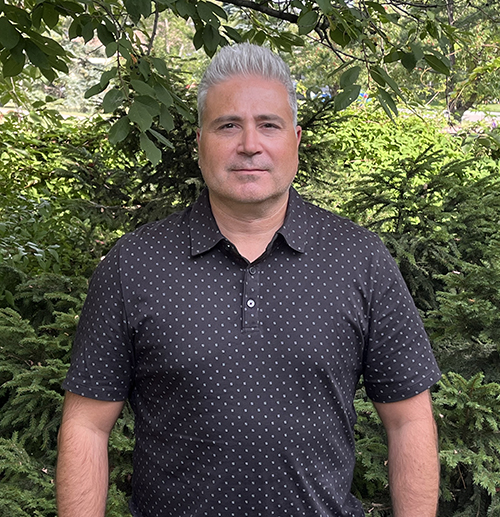
Alexandre Gauthier graduated from the Université de Sherbrooke in 2005 with a degree in mechanical engineering. He is a registered Professional Engineer with APEGA and the OIQ. He’s a member of the CMVA since 2009 and holds an Expert Vibration Analyst Category IV certification from Mobius Institute. He works in the oil and gas industry since 2005 and has developed extensive expertise in rotating equipment reliability, condition monitoring, advanced vibration analysis, troubleshooting, and asset repair. He currently serves as a Specialist Rotating Engineer at Suncor Energy within the Operational Improvement & Support Services function, supporting rotating equipment reliability across Suncor’s operating sites.
The Evolution of Machinery Diagnostics in the Age of Analytics and AI
Over the last several years, machinery diagnostics has been transformed by the growing use of data, advanced analytics, and now artificial intelligence. This keynote reflects that transformation through my own journey at Suncor, from hands-on vibration monitoring and in-depth analysis of critical equipment to an enterprise-wide role supporting rotating equipment reliability across multiple operating sites. From 2019 to 2024, I helped develop and apply a predictive and advanced analytics program for some of Suncor’s most critical assets, while remaining closely engaged in detailed monitoring, vibration analysis, and prognosis. This experience reinforced a key lesson: effective predictive work depends not only on data and models, but also on strong machinery knowledge, failure mode understanding, and sound engineering judgment. In this presentation, I will share lessons learned from that journey, including examples of early failure detection and the value of using analytics to extend specialist insight across a large fleet of equipment. I will also explore the next stage in this evolution: the use of generative AI and agentic AI to enhance learning, troubleshooting, and diagnostic support. These technologies offer real promise, but they also require clear guardrails around confidentiality, validation, and responsible use. In the end, AI can augment reliability professionals, but it does not replace their accountability.
L’évolution du diagnostic des machines à l’ère de l’analytique avancée et de l’intelligence artificielle
Au cours des dernières années, le diagnostic des machines a été profondément transformé par l’utilisation croissante des données, de l’analytique avancée et, maintenant, de l’intelligence artificielle. Cette conférence d’ouverture reflète cette transformation à travers mon propre parcours chez Suncor, depuis la surveillance vibratoire sur le terrain et l’analyse approfondie d’équipements critiques jusqu’à un rôle à l’échelle de l’entreprise en soutien à la fiabilité des équipements rotatifs sur plusieurs sites d’exploitation. De 2019 à 2024, j’ai contribué au développement et à l’application d’un programme d’analytique prédictive et avancée pour certains des actifs les plus critiques de Suncor, tout en demeurant étroitement impliqué dans la surveillance détaillée, l’analyse vibratoire et le pronostic. Cette expérience a renforcé une leçon essentielle : un travail prédictif efficace repose non seulement sur les données et les modèles, mais aussi sur une solide connaissance des machines, une bonne compréhension des modes de défaillance et un jugement d’ingénierie rigoureux. Dans cette présentation, je partagerai les leçons tirées de ce parcours, y compris des exemples de détection précoce de défaillances et la valeur de l’analytique pour étendre l’expertise des spécialistes à un vaste parc d’équipements. J’aborderai également la prochaine étape de cette évolution : l’utilisation de l’IA générative et de l’IA agentique pour améliorer l’apprentissage, le dépannage et le soutien au diagnostic. Ces technologies sont porteuses d’un réel potentiel, mais elles exigent aussi des balises claires en matière de confidentialité, de validation et d’utilisation responsable. En fin de compte, l’IA peut augmenter les professionnels de la fiabilité, sans toutefois remplacer leur responsabilité.
NEW FOR STUDENTS!
A discussion panel focusing on The Next-Generation Reliability: Career Paths, Industry Change, and the Future of Vibration Analysis.
Join an open conversation with early-career professionals from across the reliability and vibration analysis community. Panelists from engineering, reliability, and condition monitoring will share their career paths, key lessons learned, and perspectives on where the industry is headed.
Matt Firth, Vibration Analyst & Predictive Maintenance Specialist, NB power Point Lepreau
Carter Goddard, Millwright Apprentice, NAIT Student
Laurie MacLachlan, General Manager, Primac
Jaret Marshall, Millwright, Vibration Analyst, and Business Owner, Vibratech Solutions
Mikayla Pattison, Machinery Asset Specialist, Spartan Controls
Matt Firth is a Red Seal Millwright with more than 25 years of experience in heavy industry, including 13 years specializing in Predictive Maintenance and Reliability. His career spans diverse sectors, including automotive assembly, pharmaceuticals, steel manufacturing, pulp and paper, and the nuclear industry. Currently, Matt applies his expertise at Point Lepreau Nuclear Generating Station in New Brunswick, Canada, supporting equipment reliability, condition monitoring, and maintenance optimization in a highly critical and safety-focused environment.
Matt also serves as President of the Atlantic Chapter of the Canadian Machinery Vibration Association (CMVA), promoting the advancement of Predictive Maintenance and Reliability practices. He holds certifications in Vibration Analysis Category III, Ultrasound Level II, Thermography Level II, MLT I, MLA I, and Motion Amplification Level I. Passionate about knowledge sharing and mentoring, Matt is committed to advancing innovative, data-driven maintenance strategies that improve equipment reliability and operational performance.
From Vibration to Resolution: Solving Fan Resonance Through Structural Modification
Resonance is a common but often challenging source of excessive vibration in rotating equipment. Correctly identifying resonance as the root cause is critical, as conventional corrective actions such as balancing or component replacement may not address the underlying problem.
This presentation examines two industrial fan case studies where excessive vibration was traced to structural resonance. The first fan operated at 1800 RPM, with vibration levels reaching 43.5 mm/s. The second operated at 1200 RPM, with vibration levels of 13.4 mm/s. In both cases, vibration analysis indicated that the fan operating speed was closely associated with a structural natural frequency.
Frequency Response Function (FRF) testing was performed to characterize the supporting structures and accurately identify their natural frequencies. Testing confirmed that both structures had natural frequencies below their respective operating speeds, resulting in significant dynamic amplification during operation.
Rather than treating the symptoms through balancing or equipment replacement, the corrective action focused on modifying the supporting structures to increase their stiffness and shift the natural frequencies away from the operating speeds. Following the structural modifications, vibration levels on the first fan were reduced from 43.5 mm/s to 3.66 mm/s, while the second fan decreased from 13.4 mm/s to 1.98 mm/s.
These case studies demonstrate the effectiveness of combining conventional vibration analysis with FRF testing to diagnose structural resonance and determine an appropriate corrective action. They also highlight how targeted structural modifications can provide a relatively simple, cost-effective, and permanent solution to severe vibration problems.
SHANNON LAU, Suncor Syncrude Mildred Lake
Shannon Lau, P.Eng. has been working in the oil and gas industry since 2008. She currently serves as the Rotating Reliability Engineering Advisor and Technical Authority for the Syncrude Mildred Lake site. Shannon holds a degree in Engineering Physics from the University of British Columbia and has worked with rotating equipment across both refining and power generation assets, with particular interests in machinery protection and monitoring systems. She holds a Vibration Analysis CAT II certification and serves as Chair of the Power Users Frame 5 Gas Turbine Steering Committee.
Not Everything That Looks Like a Rub Is a Rub: A 68 MW Steam Turbine Generator Case Study
A 68 MW hydrogen-cooled steam turbine generator began exhibiting intermittent vibration excursions shortly after a major overhaul. While the events remained below alarm thresholds and attracted little operational concern, the vibration signatures appeared consistent with a Newkirk effect. Historical maintenance records revealed localized areas of minimal floating seal clearance, making a rub-induced thermal response a reasonable initial hypothesis. However, the machine remained in continuous service, limiting opportunities for inspection and diagnostic confirmation.
The investigation became more complex following an unrelated unit trip and subsequent restart that resulted in a vibration trip. Transient data fundamentally challenged the original diagnosis. The machine response during coastdown did not support a rub-induced thermal unbalance mechanism. Instead, the data pointed toward a more complex interaction involving rotor dynamics, bearing loading, and thermal effects.
As the investigation progressed, attention shifted from generator seals to the dynamic behavior of the low-pressure turbine bearing and the effects of thermal growth within the turbine-generator train. Further investigation identified a sticking turbine front standard slide, with step changes in movement observed during load reductions as the turbine casing contracted. This restricted thermal movement correlated with vibration excitation at the low-pressure turbine bearing. The investigation was further complicated by the machine’s 1970s-vintage design and the absence of a train rotordynamics study, limiting insight into the dynamic behavior of the hard-coupled turbine-generator train.
This presentation reviews the diagnostic process, competing hypotheses, and lessons learned while troubleshooting a critical machine that remains in operation and is not scheduled for a major outage until 2031. The case study demonstrates the challenges of diagnosing intermittent vibration events on unspared equipment with long maintenance intervals and emphasizes the value of combining vibration analysis, machine design knowledge, operating history, and field observations when evaluating potential failure mechanisms.
ERIC KAERT, Spartan Controls
Eric Kaert has a bachelor of Science in Engineering from the University of Alberta. Has worked 14 years at Spartan Controls currently as Business Development in the Industrial Software & Applications group focused on analytical data solutions.
Asset Intelligence: Automated technical interpretation of industrial data
See how combining automation expertise with data science and ML can gain new actionable insight from existing industrial data. Cohesive knowledge and support from sensors to digital infrastructure and analytics make unique in house solutions possible. SpartanPRO Asset Intelligence brings to the surface what is most important allowing teams to focus their time efficiently and effectively. Automatically and proactively have the asset health information and data to make better performance, reliability and optimization decisions. Example use cases for pumps, control valves and compressors will be covered.
LETICIA GOMES MATHIAS NETTO LIMA, The Constellation
Leticia Lima is an Offshore Reliability Engineer in the oil and gas industry, with a background in Metallurgical and Materials Engineering and Electromechanical Technology. She holds a specialization in Equipment and Materials Inspection Engineering and has experience in equipment reliability, failure analysis and performance improvement. Her professional background includes reliability engineering methodologies, failure investigation, maintenance strategy and equipment performance analysis. She also has technical training in vibration analysis, infrared thermography, FMEA, RCM, root cause analysis and oil analysis. Her professional interests include reliability engineering, condition monitoring, failure analysis and the application of data and engineering methods to support asset performance and maintenance decision-making.
From Online Condition Monitoring to Predictive Maintenance Decisions:An offshore drilling case study
(Main author Vilderson Dias)
Offshore drilling operations require maintenance strategies capable of identifying equipment degradation early enough to support planned interventions and reduce unplanned downtime. This paper presents the implementation and evolution of an online condition monitoring approach for diesel engines and generators operating across an offshore fleet.
The initiative evolved from periodic condition assessments to continuous, real-time monitoring. The monitoring architecture integrates onboard sensors, data transmission and centralized condition monitoring platforms, enabling continuous visualization and analysis of equipment condition. Key variables include vibration, temperature, electrical and operational parameters, with additional condition indicators such as oil contamination and moisture incorporated into the monitoring strategy.
A structured workflow was established to transform raw monitoring data into maintenance decisions: measurement, data transmission, alarm generation, technical analysis, decision-making and execution. Technical specialists evaluate alarms and trends, issue condition-based recommendations and, when required, initiate maintenance actions through the company’s maintenance management system.
The application demonstrated measurable results. Eighteen diesel generator sets are monitored continuously, with nine equipment conditions identified before failure since 2024. In 2026, three of four documented detections originated from online monitoring. Five documented cases represent an estimated 1,128 corrective maintenance hours avoided.
The case demonstrates how continuous condition monitoring, integrated data and multidisciplinary technical assessment can strengthen predictive maintenance in offshore operations. Beyond detecting anomalies, the approach creates a structured flow from equipment condition to maintenance action, providing earlier intervention opportunities, improved decision-making and a historical basis for identifying recurring failure patterns.
JAYSON BARCELO, Primac Reliability Consultants
Jayson Barcelo is a Condition Monitoring Specialist with over 18 years of experience in the field of maintenance, projects, equipment reliability, predictive maintenance, and asset management. Throughout his career in the cement and manufacturing industries, he has led initiatives involving vibration analysis, lubrication excellence, root cause failure analysis, preventive and predictive maintenance, and equipment reliability improvement. Jayson holds a Bachelor’s Degree in Mechanical Engineering and certifications as a Category II Vibration Analyst, Category I Ultrasound, Level II Machine Lubricant Analyst, and Level I Machinery Lubrication Technician. He has successfully implemented reliability programs, optimized maintenance strategies, and managed major capital and equipment replacement projects. Jayson is passionate about helping organizations improve asset performance to the highest standards, reduce maintenance costs, and build sustainable reliability cultures through condition monitoring and data-driven maintenance practices.
Ultrasonic Lubrication Program: Technical Case Study on a Forced Draft Fan Fixed End Bearing Reliability Improvement
The ultrasonic lubrication program implemented on a forced draft fan fixed end bearing in a petrochemical plant delivered significant reliability improvement through the application of condition-based lubrication principle. This initiative supports the objectives of ISO 55000, ISO 55001, and ISO 55002 by reducing asset risk, improving equipment performance, and enabling evidence-based maintenance decisions.
Historically, the fixed end bearing experienced chronic and multiple premature failures, requiring replacement approximately every six months resulting in costly maintenance and high reliability risk to operations. To address this issue, a structured ultrasonic lubrication program was implemented utilizing a bi-weekly frequency based on ultrasonic condition monitoring rather than traditional calendar-based intervals.
The program showed significant improvements in bearing operating condition. The ultrasonic dB RMS readings decreased from 56 to 33, representing an approximate 14 times ultrasonic signal reduction and 92.9% friction reduction. The bearing operating temperatures decreased by about 10–15°C, indicating improved lubrication film and reduced mechanically induced friction. The bearing life increased from an average of 4,380 operating hours to 17,424 hours, which is equivalent to quadruple the bearing life expectancy.
Additional benefits included a 50–60% reduction in grease consumption, reduced labor requirements associated with routinary lubrication activities, and improved overall maintenance utilization. Reliability analysis estimated that approximately 0.90 bearing failures were avoided during the monitoring period.
Financial analysis showed an estimated cost avoidance of approximately $191,348 against an annual program cost of $3,845, resulting in a return on investment (ROI) of approximately 4,876.5% and a payback period of 0.44 months.
The field results demonstrated that ultrasonic lubrication is a repeatable, scalable, and low-risk maintenance strategy capable of significantly improving equipment reliability while reducing operational costs.
1672 Route 860, Titusville, NB E5N 3W5
Phone
(416) 622-1170
© CMVA 2025